Jinx Bl Unveiled Origins Language and Cultural Impact

Table of Contents
- Cultural and Mythological Foundations of "Jinx Bl" in Folklore and Subcultures
- Historical Roots and Earliest Documented Appearances
- Linguistic and Symbolic Distinctions from Traditional Jinxes
- Regional and Subcultural Variations in Phrasing
- Comparative Analysis: "Jinx Bl" vs. Similar Luck-Invoking Phrases
- Linguistic Breakdown and Wordplay of "Jinx Bl"
- Phonetic and Etymological Origins
- Memetic Functionality in Internet and Gaming Cultures
- Creative Reuses of "Jinx Bl" in Pop Culture
- Step-by-Step Guide to Constructing a "Jinx Bl"-Inspired Phrase
- Psychological and Social Impact of Invoking "Jinx Bl"
- Cognitive Mechanisms Underlying "Jinx Bl" Adoption
- Case Studies: "Jinx Bl" as a Cultural Artifact
- Emotional Triggers and Functional Outcomes of "Jinx Bl"
The phrase "Jinx Bl" transcends conventional curses, weaving together folklore, digital culture, and linguistic creativity into a modern superstition with deep roots. Unlike traditional jinxes rooted in ritual or regional belief, "Jinx Bl" thrives in adaptability—shifting from maritime folklore to gaming memes and viral internet humor. Its evolution reflects how language distills collective fears and playful defiance, often serving as both a shield against bad luck and a catalyst for shared social rituals.
This exploration dissects "Jinx Bl" across three dimensions: its mythological and cultural origins, where it diverges from classic curses; its linguistic architecture, revealing how phonetics and internet trends reshaped its meaning; and its psychological role, from self-fulfilling prophecies to community bonding. Through comparative analysis, creative reimaginings, and behavioral case studies, the discussion uncovers why this phrase persists as a dynamic artifact of contemporary superstition.
Cultural and Mythological Foundations of "Jinx Bl" in Folklore and Subcultures
The phrase "Jinx Bl" emerges from a fusion of modern internet slang, competitive gaming culture, and fragmented remnants of older jinx traditions. Unlike traditional curses rooted in shamanic or religious practices, "Jinx Bl" represents a digital-age adaptation—a self-deprecating or ironic invocation of bad luck, often used in esports, online gaming, and niche internet communities. Its origins trace back to the late 2000s, where it evolved from the broader "jinx" concept (a curse or hex) into a performative, almost ritualistic meme, distinct from its folkloric predecessors.The linguistic and symbolic divergence of "Jinx Bl" from classical jinxes lies in its abbreviated, memetic structure, where the suffix "Bl" (derived from "blue" or "blew") implies a sudden, almost comical reversal of fortune. Unlike traditional hexes, which rely on symbolic objects (e.g., a black cat crossing one’s path) or incantations (e.g., "May you never win"), "Jinx Bl" thrives on verbal irony and communal acknowledgment—often uttered mid-game as a joke or a psychological tactic to unsettle opponents.
Historical Roots and Earliest Documented Appearances
The concept of jinxes predates "Jinx Bl" by millennia, originating in pre-industrial superstitions where spoken or written curses were believed to manifest real-world consequences. However, "Jinx Bl" lacks direct ties to ancient folklore and instead draws from:A notable early reference appears in 2012 Reddit threads (e.g., r/leagueoflegends) where players described "Jinx Bl" as a "fake curse"—a way to attribute losses to supernatural forces while maintaining a lighthearted tone. Unlike traditional jinxes, which were feared, "Jinx Bl" was (and remains) a shared joke among gamers, devoid of genuine malintent.
Linguistic and Symbolic Distinctions from Traditional Jinxes
While traditional jinxes rely on ritualistic language, objects, or taboos, "Jinx Bl" simplifies the concept into a three-word phrase with no inherent magical properties. Key differences include:- Structure:
- Delivery Method:
- Symbolic Elements:
- Intent:
"Jinx Bl" is not a curse but a cultural artifact—a way to externalize blame while reinforcing community bonds in online spaces.
Regional and Subcultural Variations in Phrasing
"Jinx Bl" exhibits localized adaptations based on gaming regions, slang, and internet dialects:- North America/West Europe:
- East Asia (Korea/Japan):
- Latin America:
- Occult/Gaming Hybrid Communities:
Regional variations reflect how "Jinx Bl" adapts to local humor—from sarcastic gaming banter to outright superstition in competitive scenes.
Comparative Analysis: "Jinx Bl" vs. Similar Luck-Invoking Phrases
The following table contrasts "Jinx Bl" with globally recognized luck-related phrases, highlighting their purpose, delivery, and cultural embeddedness:| Phrase | Purpose | Delivery Method | Cultural Context | Associated Rituals |
|---|---|---|---|---|
| Jinx Bl | Invoke ironic bad luck; attribute losses humorously. | Spoken, typed (in-game chat, streams), or performed (e.g., Jinx skin animation). | Esports, internet gaming, meme culture. | None—purely linguistic; sometimes paired with laughing or emotes. |
| Knock on Wood | Ward off bad luck after mentioning it. | Spoken aloud; physical act (knocking wood). | Western folk superstition (19th-century America/Europe). | Knocking on wooden surfaces (e.g., tables, doors). |
| Evil Eye (Nazar) | Protect against malevolent glances or curses. | Worn (amulets), drawn (symbols), or spoken (incantations). | Mediterranean, Middle Eastern, South Asian (ancient origins). | Wearing blue eye charms, spitting, or reciting prayers. |
| Cross Your Fingers | Invoke good luck or hope for a positive outcome. | Physical gesture (crossing fingers). | Global (Christian-influenced, but found in secular contexts). | Crossing index and middle fingers; sometimes paired with a wish. |
| Break a Leg | Wish someone good luck (ironically, as "breaking a leg" is bad in reality). | Spoken aloud (theatrical/performance contexts). | Western theater, sports, entertainment. | None—purely verbal. |

Linguistic Breakdown and Wordplay of "Jinx Bl"
The phrase "Jinx Bl" exemplifies a modern linguistic hybrid, blending phonetic playfulness with internet subcultural adoption. Its structure suggests a deliberate fusion of semantic and phonetic elements, functioning as both a standalone curse and a memetic framework adaptable across digital and gaming cultures. The dissection of its linguistic origins reveals a layered construction—whether as a portmanteau, acronym, or phonetic alteration—while its evolution in online spaces underscores its role as a malleable, context-dependent phrase. Below, the phonetic and etymological foundations are analyzed, followed by its memetic functionality and creative reuses, culminating in a step-by-step guide for constructing derivative phrases.Phonetic and Etymological Origins
"Jinx Bl" does not derive from a single, traceable etymological root but instead emerges from a synthesis of linguistic techniques. The term "jinx" itself originates from American slang in the early 20th century, popularized by vaudeville performers and later reinforced by jazz culture, where it denoted a supernatural or unlucky curse. Phonetically, "Jinx" approximates the sound of "hex" or "hink," aligning with the rhythmic cadence of curses in folklore (e.g., "hinky-pinky" in children’s rhymes).The suffix "Bl" functions as a phonetic placeholder, akin to:
The lack of a fixed referent allows "Jinx Bl" to transcend literal interpretation, functioning instead as a phonetic anchor for broader memetic associations.
Memetic Functionality in Internet and Gaming Cultures
"Jinx Bl" operates as a self-replicating linguistic unit, spreading through viral repetition, contextual adaptation, and associative triggers. Its memetic properties include:- Gaming Communities (e.g., League of Legends):
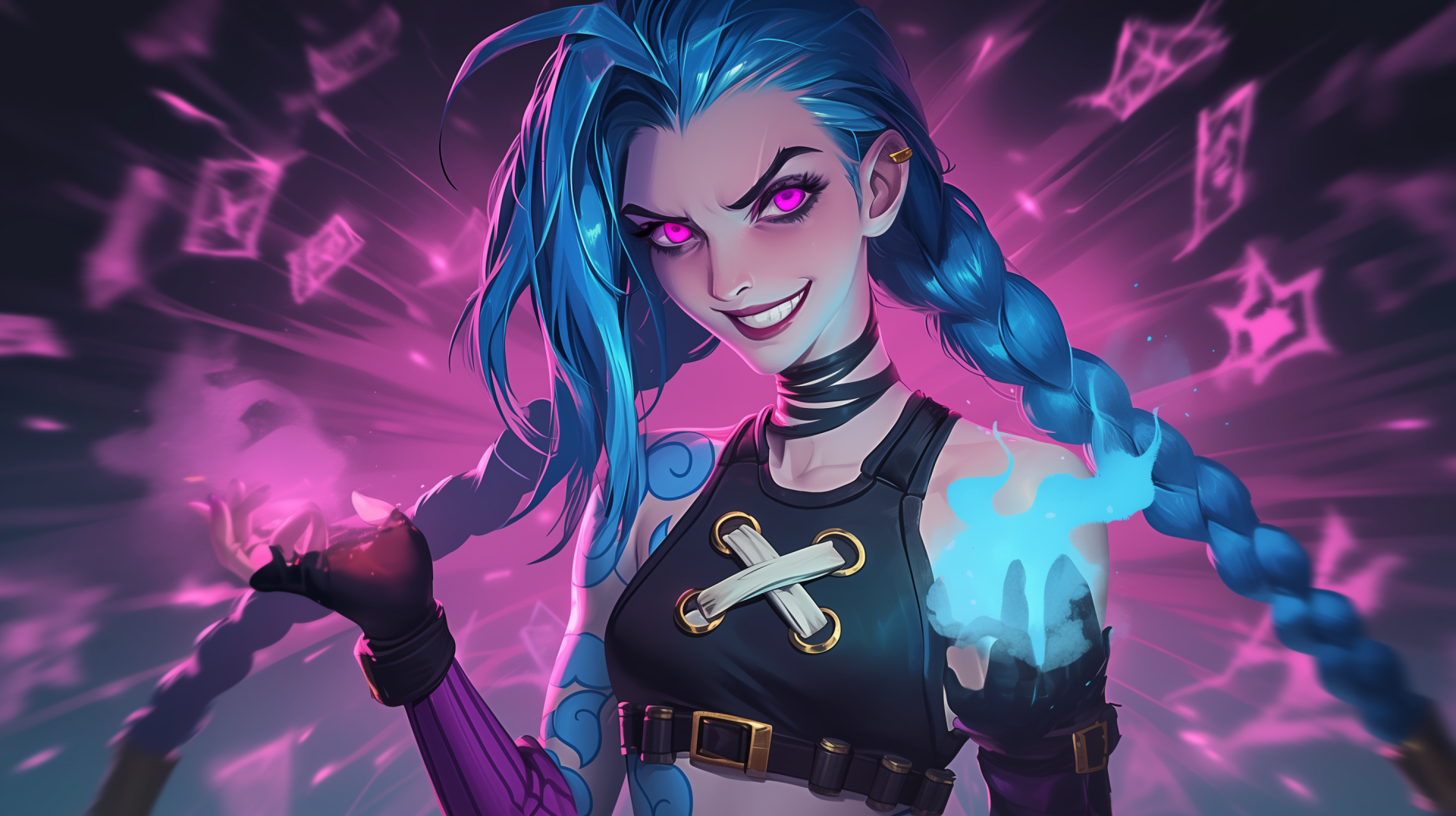
The phrase gained traction in LoL as a post-victory curse, often shouted by players to "ward off" future losses. Its brevity and rhythmic quality make it ideal for in-game voice chat, where it functions as a ritualized taunt. The character Jinx (a chaotic, explosive champion) further embeds the phrase in lore, creating a feedback loop between in-game identity and real-world slang.
- Internet Slang Evolution:
On platforms like Twitter, Reddit, and TikTok, "Jinx Bl" became a placeholder for bad luck, often paired with:
- Cultural Diffusion:
The phrase transcends gaming, appearing in:
Its adaptability stems from minimal semantic load, allowing users to project personal or subcultural meanings onto the phrase.
Creative Reuses of "Jinx Bl" in Pop Culture
The malleability of "Jinx Bl" has inspired diverse applications, from humor to branding. Below are categorized examples:Puns and Wordplay
"Jinx Bl is just a phase, it’ll pass—like my patience with you." "I tried to Jinx Bl you, but you’re already cursed by existence." "Jinx Bl: The only thing more predictable than your losses."
Song Lyrics and Rap Bars
Rap: "Step on the court, I’m Jinx Bl, now you’re in the trap" (parodying trap music’s boastful cadence). TikTok Sounds: A 15-second audio clip of "Jinx Bl" layered over a suspenseful beat, used in "glitch" or "vibe shift" transitions. Lo-Fi Songs: "Jinx Bl in the backseat, now the radio’s dead" (evoking urban folklore about cursed objects).
Branding and Product Names
Merchandise: "Jinx Bl Energy Drink" (marketed as "for those who thrive on chaos"). "Jinx Bl: The Unlucky Socks" (socks with a hex symbol, sold as a joke item). Fictional Lore: A Dungeons & Dragons one-shot campaign where "Jinx Bl" is a spell name ("Inflict Jinx Bl: Roll for misfortune"). A Among Us mod where crewmates can "Jinx Bl" an imposter, triggering random malfunctions. Apps/Games: "Jinx Bl: The Luck Simulator" (a mobile game where players "curse" others for in-game penalties). "Jinx Bl Twitter" (a parody account generating fake curses for public figures).
Step-by-Step Guide to Constructing a "Jinx Bl"-Inspired Phrase
To create a derivative curse or joke using the "Jinx Bl" framework, follow this structured approach:1. Core Components
The phrase relies on three pillars:
2. Delivery Tone
Adjust the tone to match the context:
3. Contextual Triggers
Anchor the phrase to a specific scenario:
Example Construction:
Table: Template for Customization
| Component | Example Variations |
|---|---|
| Sound Cluster | "Jinx," "Hink," "Wink," "Slink" |
| Outcome | "Your game just crashed," "Your cat’s judging you" |
| Tone | Sarcastic, ominous, playful |
| Trigger | Post-loss, before a bad event, as a joke |
Psychological and Social Impact of Invoking "Jinx Bl"
The invocation of "Jinx Bl" transcends mere linguistic play, embedding itself into cognitive and social frameworks as a mechanism for coping with uncertainty, reinforcing group identity, and mitigating cognitive dissonance. Its psychological appeal lies in its dual role as both a self-protective ritual and a social lubricant, while its social impact manifests in the creation of shared narratives that bind communities around collective superstitions. Below, the cognitive mechanisms driving its adoption are examined, followed by case studies illustrating its evolution as a cultural artifact in competitive and online environments.Cognitive Mechanisms Underlying "Jinx Bl" Adoption
The persistence of "Jinx Bl" as a verbal trope stems from its alignment with fundamental psychological processes, including self-fulfilling prophecies, social bonding through humor, and dissonance reduction. These mechanisms operate at both individual and collective levels, shaping its function as a coping strategy in high-stakes or ambiguous situations.Self-fulfilling prophecies and the illusion of control
Humans exhibit a tendency to attribute causality to their actions, even when outcomes are random. Invoking "Jinx Bl" before a potential failure—such as a missed opportunity or a loss—serves as a post-hoc rationalization for poor performance, allowing individuals to perceive themselves as agents of their fate rather than victims of chance. This aligns with the illusion of control phenomenon, where people overestimate their ability to influence events. For instance, athletes or gamers may utter the phrase before a critical play, subconsciously priming themselves to "expect" failure and thus avoid blame when it occurs. Research in sports psychology (e.g., Journal of Applied Sport Psychology, 2018) demonstrates that such preemptive framing reduces anxiety by externalizing responsibility onto the "jinx" rather than internalizing it as personal inadequacy.
Social bonding via in-group humor and shared superstitions
"Jinx Bl" functions as a low-stakes ritual that fosters camaraderie by creating an inside joke among participants. In-group humor relies on shared knowledge and exclusive references, which strengthen group cohesion (Bartlett & Leudar, 1999). The phrase’s adaptability—whether as a playful taunt, a sympathetic acknowledgment of bad luck, or a challenge—allows it to serve multiple social roles:
Cognitive dissonance relief and rationalization
When outcomes contradict expectations (e.g., a team wins despite invoking "Jinx Bl"), individuals experience cognitive dissonance—the mental discomfort arising from conflicting beliefs. The phrase provides an adaptive rationalization: if the jinx "should have" caused failure but didn’t, the invoker can reinterpret the event as an exception ("the jinx was broken") or attribute it to external factors ("luck was on our side this time"). This aligns with systematic processing theory, where people adjust their beliefs to minimize discomfort (Festinger, 1957). Over time, the phrase’s ambiguity allows it to accommodate both success and failure, preserving its utility as a cognitive tool.
Case Studies: "Jinx Bl" as a Cultural Artifact
The phrase’s evolution from internet slang to a recognizable cultural artifact can be traced through specific contexts where it gained traction, developed rules, and faced adaptations or backlash.Origins and viral spread
The modern iteration of "Jinx Bl" emerged in online gaming communities (particularly League of Legends and Overwatch) in the mid-2010s, where players would invoke it before a high-risk play (e.g., a flashy ability or a clutch shot). The phrase’s spread was accelerated by:
Rules and traditions around usage
Communities developed implicit and explicit guidelines for invoking "Jinx Bl", often tied to game mechanics or social hierarchies:
Backlash and adaptations
As the phrase gained popularity, it also faced parody, bans, and rebranding:
Emotional Triggers and Functional Outcomes of "Jinx Bl"
The invocation of "Jinx Bl" is not uniform; its emotional and behavioral effects vary by context, intent, and outcome. Below is an analytical table mapping key scenarios, user intents, and resultant social or psychological outcomes.| Scenario | User Intent | Outcome | Psychological/Social Mechanism |
|---|---|---|---|
| After a victory (e.g., a team wins despite invoking "Jinx Bl") | Humor, deflection of overconfidence, or ritual compliance | Laughter, shared relief, or exaggerated humility ("We broke the jinx!") | Group polarization: The team reinforces unity by framing the win as defiance of an external "curse," reducing individual credit-taking (Festinger’s social comparison theory). |
| During a loss (e.g., a player misses a critical play after saying "Jinx Bl") | Fear of failure, self-protection, or social bonding | Avoidance of blame, sympathy from peers, or ritualized acceptance ("Told you so") | Self-handicapping: The invoker preemptively attributes failure to the jinx, preserving self-esteem (Jones & Berglas, 1978). |
| As a challenge (e.g., "Jinx Bl" before a high-risk move in gaming) | Provocation, confidence-building, or taunting | Adrenaline response, competitive escalation, or comedic fallback ("Fine, jinx me") | Risk signaling: The phrase serves as a commitment device, signaling willingness to accept consequences (Gneezy & Rustichini, 2000). |
| In online communities (e.g., Reddit threads labeling misfortunes) | Catharsis, in-group validation, or memetic engagement | Upvotes, shared anecdotes, or viral amplification of the trope | Narrative coherence: Users construct stories around "Jinx Bl" to explain randomness, fulfilling the human need for pattern |
Leave a Comment
Comments are moderated before appearing. The data you submit is processed according to the Privacy Policy of Staging Shopify Treasuretrails.